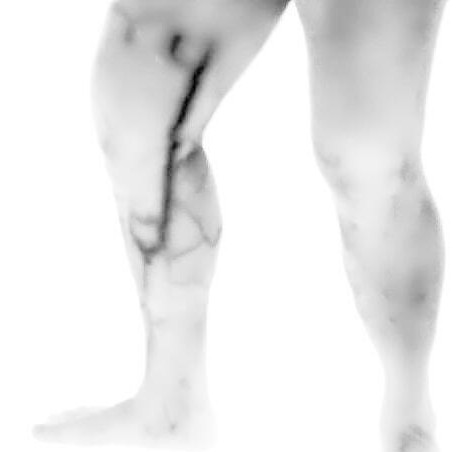
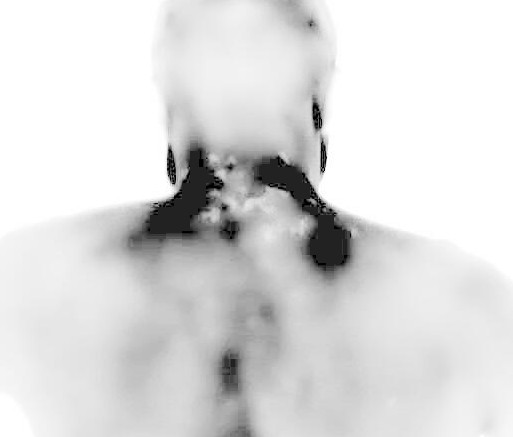
Reitz Ecosystem

Biospectral Medicine

A new frontier in functional reading of the human body.

Biospectral Medicine is a discipline created by Felipe Reitz to interpret human emissive signals and transform invisible patterns of regulation, adaptation, pain, circulation and organic function into a scientific, structured and reproducible language.

Biospectral Medicine
Functional reading

Why does Biospectral Medicine matter?

Conventional medicine visualizes anatomical structures, laboratory changes and established processes with great precision. Yet many functional manifestations emerge before they are fully expressed in structural exams. Biospectral Medicine appears as a complementary approach to observe circulatory, neuroautonomic, metabolic, adaptive and regulatory responses in movement, expanding the reading of the body as a dynamic system.

How it works

1

The body emits signals

Thermal, biospectral and autonomic patterns express regulation, adaptation, circulation and functional response.

2

CBI captures patterns

Computerized Biospectral Imaging organizes emissive signals into functional and comparable visual maps.

3

R-CIIM interprets

The Reitz method correlates intensities, morphologies, trajectories, symmetries and emission zones.

4

Report supports correlation

The reading supports medical consultation, investigative hypotheses, research, education and personalized care.

What makes Biospectral Medicine different?

Human emissive signals

The body is read as a functional field expressing regulation, overload, adaptation and response.

Computerized Biospectral Imaging, CBI

CBI expands visual reading of thermal and emissive patterns across body regions.

R-CIIM interpretive method

A proprietary structure to correlate signals, intensities, symmetry, morphology and context.

Spectral lexicon

An organized language for describing functional patterns without reducing the reading to isolated diagnosis.

19 emission zones

Regional mapping for systematic, comparable and technical observation.

Clinical, scientific and technological application

Potential for complementary care, education, research, software and health innovation.

Frequently asked questions

What is Biospectral Medicine?

Biospectral Medicine is a functional and physiological assessment created by Felipe Reitz to observe human emissive signals, especially thermal and biospectral patterns, and transform them into an organized reading of circulation, regulation, adaptation, pain and functional dynamics. For the patient, its value lies in expanding body understanding through a visual, integrated and complementary approach.

How is the biospectral assessment performed?

The assessment combines anamnesis, clinical observation, appropriate skin preparation and image capture through CBI - Computerized Biospectral Imaging. The observed patterns are then interpreted through a proprietary methodology considering body regions, asymmetries, hyperemissive areas, trajectories, clinical context and the 9 observation aspects of the method.

Is the assessment painful or invasive?

The assessment is based on observation of images and external body signals, with no blood collection, no ionizing radiation and no invasive procedure. The patient remains in a controlled environment and follows preparation guidelines so the skin and microcirculation are as free as possible from external interferences.

What type of functional information can be observed?

The assessment may demonstrate patterns related to circulation, inflammatory response, thermal asymmetries, regional overload, autonomic regulation, functional adaptation, pain and superficial metabolic dynamics. These signals are interpreted as complementary functional information, always correlated with history, symptoms and individual context.

How does Biospectral Medicine support consultation and conventional exams?

Biospectral Medicine adds a visual and functional layer to clinical reasoning, helping organize hypotheses, follow evolution, guide correlations with symptoms and enrich the conversation between patient and professional. It integrates as a complementary resource within medical consultation, diagnosis, individualized treatment and conventional examinations.

How long does it take and how do I receive the result?

The time may vary according to the purpose of the assessment and the regions analyzed, but the process generally includes preparation, acclimatization, image capture and technical interpretation. The result may be presented as guidance, report or discussion of functional findings, always with careful language and within the professional limits of the assessment.

What should I do before the biospectral assessment?

To improve image quality, avoid thermal and chemical interferences before the assessment: do not use creams, oils, perfumes, deodorants or body makeup on the day; avoid intense exercise and hot or cold showers for at least 4 hours; avoid coffee, tea, smoking, energy drinks and very hot or cold drinks for at least 2 hours; wear light and loose clothing; arrive at least 10 minutes early for acclimatization; and inform the team about medications, recent procedures, fever, sun exposure, trauma, massage or compression exams. Download preparation protocol PDF

When should I reschedule the assessment?

It may be better to reschedule when there has been recent fever, acute infection, significant inflammation, sunburn, intense skin irritation, invasive procedure, biopsy, trauma, cosmetic procedure or important physical stimulus in the region to be assessed. These situations may temporarily alter thermal response and reduce interpretive quality.

Who can benefit from a biospectral reading?

Patients who wish to better understand functional patterns of the body, follow regions of pain, circulation, adaptation, overload or asymmetry may benefit from the reading, especially when seeking a complementary, visual and integrative perspective to discuss with health professionals and organize care more clearly.
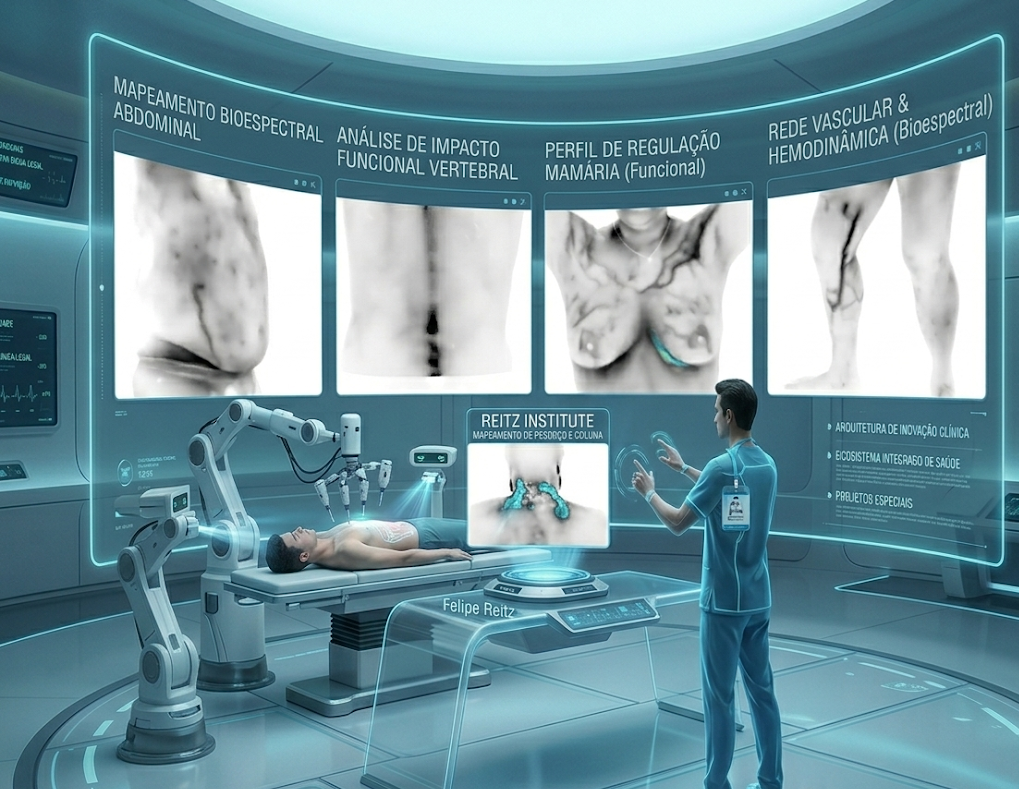
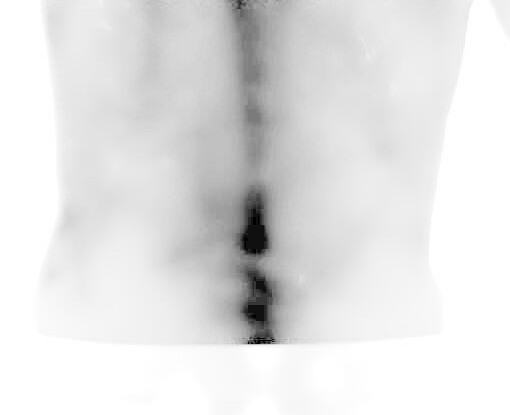
Who can this approach be relevant for?

Patients

  • Broadens functional understanding of the body.
  • Helps visualize patterns of circulation, pain, overload and adaptation.
  • Supports clearer conversations with health professionals.

Physicians and therapists

  • Offers a complementary layer of functional reading.
  • Supports correlation with clinical history, exams and symptoms.
  • Strengthens personalized care planning.

Universities and research centers

  • Opens a field for applied research in human emissive signals.
  • Encourages language standardization and functional modeling.
  • Contributes to image databases and health innovation.

Health centers and clinics

  • Adds a differentiated tool for functional screening.
  • Contributes to follow-up and patient education.
  • Supports the creation of integrated protocols.

Public and private companies

  • May support preventive health and quality-of-life projects.
  • Connects with technological innovation and applied intelligence.
  • Strengthens institutional care programs.

Investors and health innovation

  • Shows development potential in software.
  • Creates opportunities in pattern databases and analysis platforms.
  • Connects with digital education and complementary health technologies.

Lawyers and regulatory fields

  • Provides a complementary and contextual technical reading.
  • Uses objective language with clear professional boundaries.
  • May serve as documentary support in specific situations.

Education and professional training

  • Creates a visual and functional language for teaching.
  • Supports training with investigative reasoning.
  • Expands systemic understanding of the human body.
The Atlas of Infrared Thermography
Atlas · Felipe Reitz

The Atlas of Infrared Thermography

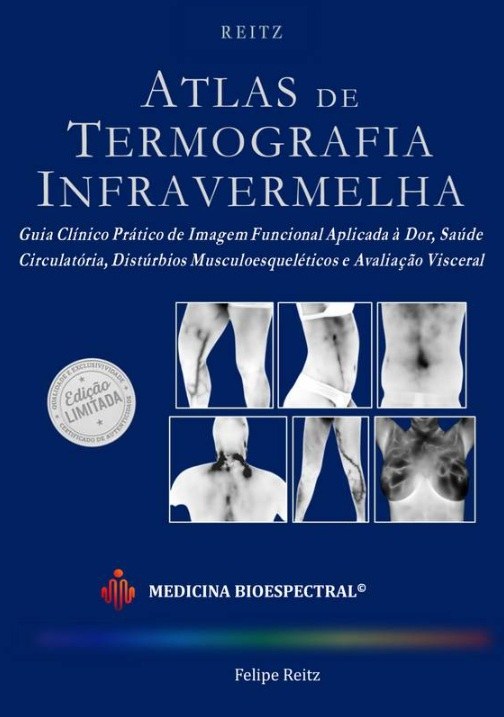
The Atlas of Infrared Thermography, by Felipe Reitz, consolidates more than two decades of clinical and scientific development of Biospectral Medicine, presenting foundations, methodology, R-CIIM, spectral lexicon, 19 emission zones, case studies and reference tables for clinical, educational and investigative use.

Discover the Atlas →

Explore Biospectral Medicine

If you are a patient, health professional, researcher, institution, company or investor interested in understanding, applying, studying or developing opportunities related to Biospectral Medicine, contact us.