

CSQ · QAC · Felipe Reitz

CSQ

Cognitive Signature Questionnaire

Discover the invisible architecture of your thought.

CSQ — Cognitive Signature Questionnaire, also presented in Portuguese as QAC — Questionário de Assinatura Cognitiva, was created by Felipe Reitz to reveal how a mind detects signals, integrates perspectives, builds methods, decides under uncertainty and transforms understanding into action.

  • It does not merely measure content, memory or performance.
  • It reveals how the mind organizes complexity.
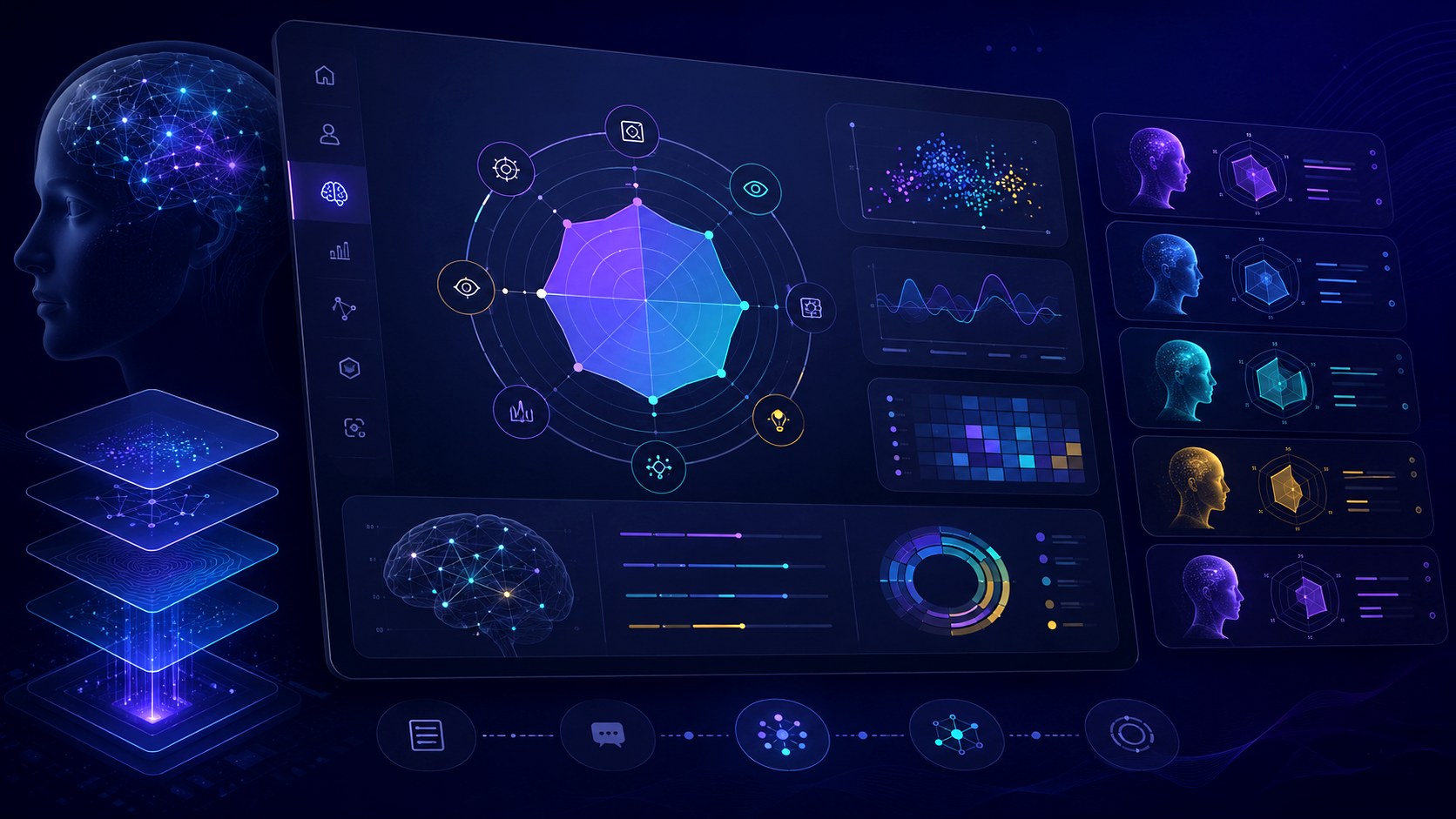
  • It generates a professional report with structural insight and practical guidance.
CSQ hero image
30questions
7cognitive dimensions
8possible signatures
PDFPDF report
A new language for intelligence

What is CSQ?

CSQ is a structurally oriented questionnaire of high intellectual density designed to map a person’s cognitive architecture. Instead of asking only what someone thinks, the instrument reveals how that person perceives change, recognizes patterns, deals with ambiguity, builds methods and integrates ideas in complex situations.

It does not only measure what you know. It reveals how you think.
CSQ developmental path
Deep structure

Why is CSQ so different?

Most traditional assessments measure traits, preferences, behavioral styles or performance. CSQ operates at another level: it observes the geometry of thought. That means mapping how a person structures reality before responding to it.

  • How many lenses do you use to interpret a situation?
  • Do you wait for clear signals or detect early divergence?
  • Do you follow existing frameworks or create new methods?
  • Can you detect patterns within noise?
  • Do you act early, late or at the point of transformation?
  • Do you integrate ideas horizontally, vertically or structurally?
Felipe Reitz

Developed by Felipe Reitz

CSQ was developed by Felipe Reitz, an author, researcher and creator of conceptual systems focused on human complexity, cognitive sustainability, civilizational coherence, structural maturity and applied intelligence. The instrument emerges from a deeper question: how can human beings sustain coherence when the complexity of the world surpasses inherited cognitive capacity?

For this reason, CSQ is not a superficial self-knowledge quiz. It is a tool to map the relationship between mind, complexity and the future.

Developmental design

Three versions, one deep architecture

CSQ was created in three developmental versions to respect language, cognitive maturity and life context, while preserving the same central structure: 30 questions, 7 cognitive dimensions, 8 possible signatures and a final report with practical guidance.

Ages 11–13 · Cognitive Exploration

How do I think?

Concrete and familiar scenarios — school, friends, family, games, hobbies and small decisions. A gentle mirror for early development without labeling the child.

Ages 14–18 · Cognitive Discovery

How do I function?

Helps young people perceive emerging patterns in school, projects, social media, conflict, leadership, autonomy and future choices.

Ages 18+ · Cognitive Application

How do I operate?

A strategic version for adults, professionals, leaders, researchers and entrepreneurs in higher-complexity contexts.

CSQ dashboard
Cognitive architecture

The 7 cognitive dimensions of CSQ

Diagnostic Lens Multiplicity

How many perspectives you mobilize to understand a problem.

Temporal Orientation

How you perceive change, trajectories and effects over time.

Structural Processing Depth

How far beyond the surface you go to understand mechanisms and relationships.

Framework Building Tendency

Your inclination to create your own methods, models and architectures.

Signal-to-Noise Calibration

Your ability to separate relevant information from noise and detect weak signals.

Intervention Timing Threshold

When you tend to act in the face of change or emerging risk.

Integration Style

How you combine different ideas, domains and perspectives into a coherent whole.

Signature logic

Eight possible signatures

At the end of the assessment, the report organizes the profile into a dominant or emerging cognitive signature. The goal is not to put someone in a rigid box, but to offer a functional map.

Polydiagnostic Framework Builder

Builds new frameworks and reads complex systems through multiple lenses.

Signal Amplifier

Detects early signals, subtle variations and change ahead of most people.

Structural Architect

Organizes complexity into clear, consistent and applicable structures.

Linear Optimizer

Refines, organizes and executes processes with clarity, focus and efficiency.

Adaptive Synthesizer

Integrates different domains with high cognitive flexibility.

Protocol Specialist

Works with consistency, precision and respect for criteria and methods.

Emergent Pattern Reader

Perceives forms and coherence emerging from chaos.

Mixed / Developing

An architecture still in integration, common in growth or transition phases.

Practical application

Where CSQ creates value

Education

Helps young people, parents and schools understand how a person learns, perceives patterns and develops autonomy.

Career guidance

Illuminates paths and cognitive preferences without imprisoning identity.

Leadership and teams

Makes visible the cognitive differences that shape collaboration, conflict and complementarity.

Innovation

Helps identify who detects signals, creates methods, integrates domains and turns vision into execution.

Human development

Creates a deeper language than tests focused only on traits or personality.

CSQ collaboration
Report output

What does the report deliver?

  • primary cognitive signature
  • dimensional profile across the 7 dimensions
  • response consistency level
  • profile confidence
  • central interpretation
  • strengths in practice
  • blind spots to watch
  • ideal collaboration partners
  • application guidance
  • next development steps

The goal is to transform a brief assessment into an elegant, deep and applicable reading — designed for reflection, conversation, decision-making and development.

Why it matters

Why does CSQ feel remarkable?

CSQ reveals something many people have always sensed but could not name. It transforms intuition into structure, difference into map, self-knowledge into application and thought into signature.

Minimal input. Structural output.
CSQ Engine

Questionnaire and report generator

Answer the 30 questions directly on the website, generate the professional report and save it as PDF. Everything is processed locally in the browser.

Answer all 30 questions to generate the report.

Responsible use

CSQ was created as a tool for cognitive mapping, development and structural reflection. Especially with young people, results should be used as a point for conversation and development, not as a fixed label. A cognitive signature is a map of functioning, not a prison.